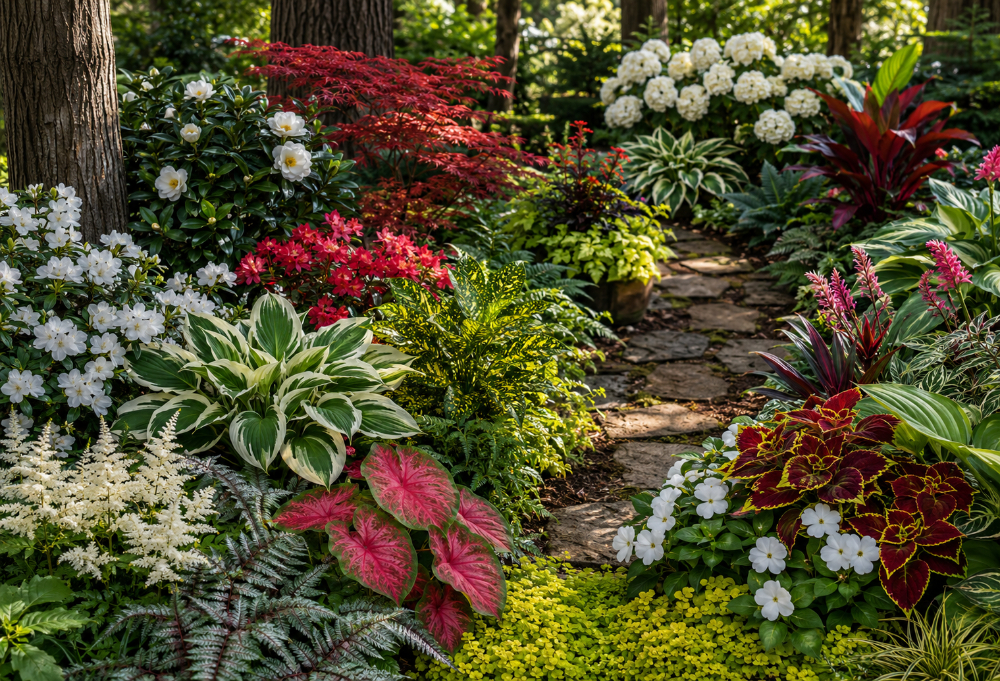
When it comes to landscaping, shady areas are not the ‘highlight’ in our master plan, but you can make the best of the situation and make it a beautiful situation by following a few key combinations. One, color is the most important factor. Without it a shade area would be nothing more than a sea of green. The secret to bringing color and interest to shady low-light areas is to use three key colors to make a low-light area pop: white, gold and some sort of red hue (crimson, burgundy, deep pink or orange). By blocking these colors together in specific areas you will achieve stunning, eye catching shade gardens. Two, make sure to create an evergreen base for year round enjoyment and fill with perennials for year after year returns. Plant annuals each spring for delight until the first frost. And third, be sure to mix plantings to offer a wide range of heights, shapes and textures!
White lightens up the deepest of shady areas by offering a color contrast and also a highlight to the form and texture of the surrounding selections. Plants with white blooms or silver hued to white variegated foliage will make it work! Plants that will offer white to the shade garden are evergreen selections of white blooming Camellias and Azaleas, Algerian Ivy and Shady Lady shrub. Perennial selections include variegated and green leaf Hydrangeas, Hostas, Blueberry Flax Lily and Iris and white blooming Astilbe and Gingers and Japanese Painted Ferns. Annuals will include Caladiums and white blooming Impatiens.
Red hues that are bold and vibrant are dynamic enough to shine in the darkness of a light shade garden. Red hues are opposite green on the color wheel so they naturally compliment each other! The red will wake up other colors and can be paired with orange, yellow and chartreuse. Some evergreen selections would include red or dark pink blooming Camellias and Azaleas. Perennial selections are Red Japanese Maple, Fire Spike, Red Banana, Strobilanthes, Purple Queen and pink blooming Gingers. Annual selections will include Caladiums, Coleus, Fuschias and red or dark pink blooming Impatiens and Magilla Perilla.
Gold will make your partial shade areas glow! Gold will magnify the sunlight and cast a glow on surrounding plants. Gold plants will need to be in medium shade, if it is a deep shade they may revert back to all green and if they get too much sun they may yellow and burn out. Selections that will include gold into the shade garden are evergreen Aucuba (Gold Dust Plant) and Creeping Jenny Lysimachia. Perennial selections are gold and chartreuse Hostas and Elephant Ears and variegated Gingers. Annual selections include many varieties of Coleus and Begonia Canary Wings.
By pairing up bright combinations for your shady areas you will be able to create stunning masterpieces all around your yard in no time!
If you’ve ever brought home a beautiful plant from a big-box store only to watch it struggle through a North Florida summer, you’re not alone. Many plants sold across the region simply are not selected with Suwannee County’s climate, sandy soils, and seasonal weather patterns in mind.
Successful gardening in this part of Florida requires a different approach than gardening in other parts of the country. Understanding local growing conditions can mean the difference between thriving landscapes and disappointing results.
North Florida gardening is most successful when homeowners choose plants suited to Zone 8b/9a conditions, improve sandy soils, and follow planting schedules designed for local weather patterns. Gardeners in and around Live Oak face unique challenges including summer heat, seasonal drought, heavy rainfall events, and variable winter temperatures. By selecting climate-appropriate plants and following local best practices, homeowners can enjoy healthier landscapes with less maintenance.
What North Florida Gardeners Should Know
North Florida’s Zone 8b/9a climate allows for a wide variety of ornamental plants, shrubs, vegetables, and tropicals when properly selected.
Sandy soils throughout Suwannee County often require organic matter and mulch to improve moisture retention.
Many plants sold by large national retailers are not always ideal for local growing conditions.
Fall and early spring are often the best times for planting many landscape shrubs and trees in this region.
Local knowledge can help homeowners avoid costly planting mistakes and improve long-term landscape success.
Gardening in this region is shaped by factors that many newcomers do not expect. While Florida is often viewed as a tropical paradise, North Florida experiences cooler winters than areas farther south. Gardeners near the Suwannee River, Dowling Park, Wellborn, and surrounding communities regularly deal with temperature swings, occasional frosts, and extended summer heat.
Local soil conditions also play a major role. Much of the area consists of sandy soil that drains quickly, making water management one of the biggest challenges for homeowners. Combined with long stretches of summer sunshine and seasonal thunderstorms, these conditions require thoughtful plant selection and proper landscape planning.
For more than 50 years, Nobles Greenhouse & Nursery has helped local homeowners navigate these unique challenges. As a family-owned business rooted in the community, we have seen firsthand which plants consistently thrive across North Florida and which ones struggle despite looking attractive at the time of purchase.
North Florida gardening is not simply about choosing beautiful plants. It is about matching plants to local conditions, understanding seasonal timing, and creating landscapes that remain healthy year after year.
North Florida gardeners benefit from selecting plants adapted to Zone 8b/9a conditions, improving sandy soils, and following seasonal planting schedules designed for local weather patterns.
Local landscapes experience hot summers, periodic drought conditions, heavy rainfall events, and occasional winter freezes.
Suwannee County’s sandy soils often require additional organic matter to support healthy root development.
Plant selection has a significant impact on long-term maintenance requirements and landscape success.
Local expertise helps homeowners avoid common mistakes associated with unsuitable plant choices.
Gardening Conditions Across Suwannee County
Sandy soils drain quickly and can require more frequent watering during dry periods.
Mulch helps conserve moisture and regulate soil temperatures throughout the growing season.
Summer heat can stress plants not adapted to local conditions.
Areas near the Suwannee River may experience different moisture levels than inland properties.
Fall planting often allows roots to establish before summer heat arrives.
Native and Florida-friendly plants generally require less maintenance after establishment.
Seasonal frost events can affect tropical and cold-sensitive species.
Container gardens may need more frequent monitoring during peak summer temperatures.
If you are looking for guidance on selecting the right plants for your property, our team is happy to help you understand which varieties are best suited for your landscape goals and local conditions.
Local Gardening Patterns and Climate Considerations
North Florida gardening success depends heavily on understanding local climate patterns and seasonal timing. Gardeners throughout Live Oak and surrounding communities experience a climate that differs significantly from Central and South Florida.
According to USDA Plant Hardiness Zone maps, much of the region falls within Zones 8b and 9a. This means gardeners must balance warm-season opportunities with occasional winter cold snaps. We regularly help homeowners choose plants capable of handling both summer heat and periodic frost events.
Local rainfall patterns also influence gardening decisions. While thunderstorms can deliver significant moisture during summer months, extended dry periods are common. Soil preparation and mulch application become especially important under these conditions.
How Local Conditions Affect Your Landscape
North Florida conditions directly impact plant health, watering needs, maintenance requirements, and overall landscape performance. Homeowners who ignore local conditions often find themselves replacing plants more frequently.
Poor plant selection can lead to increased watering demands, pest issues, and reduced curb appeal. In contrast, choosing varieties suited to the region often results in stronger growth, better flowering, and lower maintenance.
This is especially important for homeowners looking to improve property appearance, create outdoor living spaces, or increase curb appeal. Landscapes designed around local conditions generally perform better over the long term.
Expert Commentary
North Florida gardening rewards patience, planning, and local knowledge. Over decades of serving area residents, we have found that homeowners often focus on appearance first and growing conditions second.
The most successful landscapes begin with understanding soil conditions, sunlight exposure, and seasonal weather patterns. Once those factors are considered, plant selection becomes much easier and results are far more predictable.
We also see many new Florida residents surprised by how different gardening can be compared to northern states. Local guidance often helps shorten the learning curve and prevents unnecessary frustration.
Signs Your Garden May Need a Different Approach
Several warning signs suggest your current landscape plan may not be aligned with local growing conditions.
Plants require constant watering to survive.
Shrubs repeatedly struggle after summer heat arrives.
New plantings fail shortly after installation.
Soil dries out rapidly despite regular irrigation.
Pest problems seem persistent year after year.
Container plants wilt quickly during warm weather.
Certain areas of the yard never seem to support healthy growth.
Waiting too long to address these issues can lead to ongoing replacement costs and unnecessary maintenance challenges.
When to Seek Professional Gardening Advice
Professional gardening advice becomes valuable when plants repeatedly fail, landscape goals are unclear, or homeowners are unfamiliar with local growing conditions. While many gardening tasks can be handled independently, plant selection and landscape planning often benefit from expert guidance.
This is especially true for new residents adjusting to Florida’s climate. Local knowledge can help identify solutions before expensive mistakes occur.
If you are uncertain about which plants belong in your landscape, speaking with experienced nursery professionals can save both time and money.
The most common gardening challenges in North Florida include sandy soil, heat stress, inconsistent moisture levels, and selecting plants not suited for the region.
Sandy soils are among the biggest factors affecting plant performance. These soils drain quickly and often require amendments to improve nutrient retention.
Summer temperatures can also place stress on plants that are not adapted to local conditions. In addition, sudden weather changes during winter can affect cold-sensitive varieties.
Many challenges can be reduced simply by choosing plants proven to perform well throughout Suwannee County and neighboring communities.
Preventing Common Gardening Problems
Preventing gardening problems starts with selecting appropriate plants, improving soil health, and following seasonal maintenance practices.
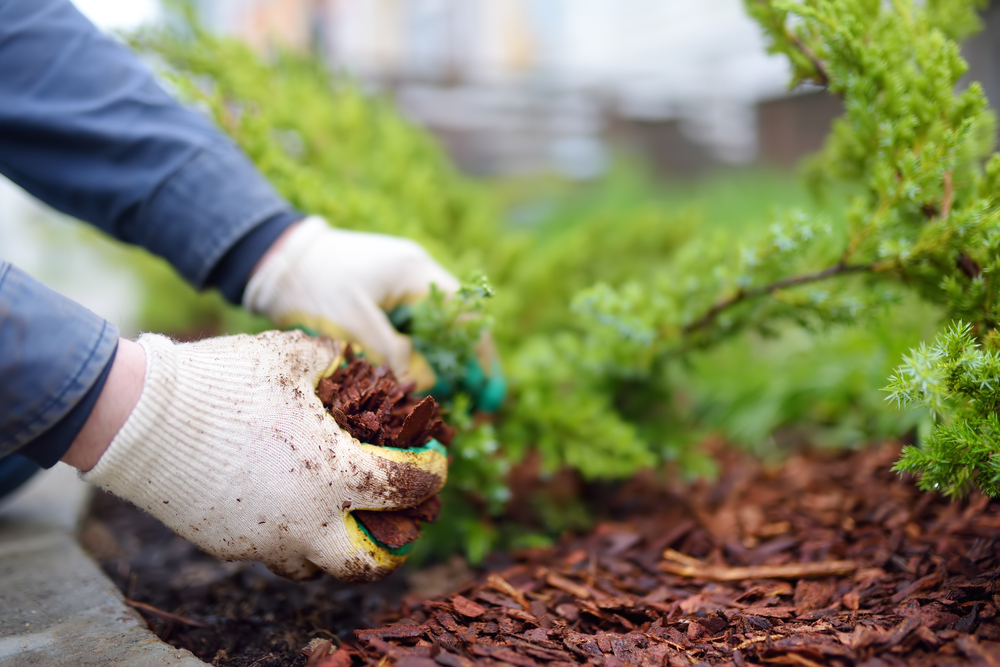
Apply mulch around landscape beds to retain moisture and suppress weeds. Incorporate organic matter when preparing planting areas. Water deeply rather than frequently to encourage stronger root systems.
We also recommend purchasing plants from sources familiar with local growing conditions rather than relying solely on national inventory selections.
What Results Can Homeowners Expect?
Homeowners who follow North Florida gardening best practices typically enjoy healthier plants, reduced maintenance, improved curb appeal, and greater long-term landscape success.
While every property differs, landscapes designed around local conditions generally require fewer replacements and less intensive care. Proper planning often produces more consistent flowering, stronger growth, and healthier root development.
Local Gardening Insight
Many of the most successful landscapes throughout Suwannee County share one trait: the plants were selected specifically for local growing conditions rather than simply for appearance. Long-term success often starts with choosing the right plant for the right place.
Common Gardening Mistakes
Mistake: Choosing plants based solely on appearance.
Consequence: Plants may struggle with local temperatures or soil conditions.
Better approach: Select varieties proven to perform well in this region.
Mistake: Ignoring soil quality.
Consequence: Reduced plant health and slower growth.
Better approach: Improve planting beds with organic matter and mulch.
Mistake: Overwatering sandy soils.
Consequence: Nutrient loss and weaker root systems.
Better approach: Water deeply and appropriately based on plant needs.
A Common Local Scenario
A common local scenario involves a homeowner who recently relocated to North Florida and installs landscape plants familiar from another state. During the first summer, several plants struggle despite regular watering.
After evaluating sunlight, soil conditions, and plant suitability, the homeowner replaces unsuitable selections with varieties adapted to local conditions. The landscape becomes easier to maintain and performs more consistently through seasonal weather changes.
Gardening Solutions That Support Long-Term Success
The best gardening solutions for local homeowners include expert plant selection, climate-appropriate landscaping, soil improvement strategies, container garden planning, and seasonal planting guidance.
We help homeowners identify plants that match their goals while remaining realistic for local conditions. Whether you are interested in flowering shrubs, indoor tropicals, shade plants, or low-maintenance container gardens, selecting the right varieties from the start often delivers the best results.
When planning a landscape, homeowners generally have two choices: trial-and-error purchasing or locally informed plant selection.
Trial-and-error approaches may work occasionally but often lead to unnecessary plant replacement costs. Locally informed decisions are based on climate, soil conditions, and long-term performance expectations.
For many homeowners, working with knowledgeable nursery professionals provides a more efficient path to successful gardening.
Service Areas
We proudly serve homeowners throughout Live Oak, Suwannee County, Wellborn, Dowling Park, Branford, and surrounding North Florida communities.
Our familiarity with local growing conditions allows us to provide recommendations tailored to properties throughout the region.
The Cost of Ignoring Local Growing Conditions
Ignoring local growing conditions can result in repeated plant losses, increased watering expenses, ongoing maintenance issues, and disappointing landscape performance.
Plants that are not suited for the area often require additional attention and may never reach their full potential. Over time, these challenges can cost more than investing in proper plant selection from the beginning.
What are the best plants for North Florida gardens?
The best plants for North Florida gardens are those adapted to Zone 8b/9a conditions. Native plants, Florida-friendly shrubs, and regionally proven ornamentals often perform well because they are suited to local temperatures, rainfall patterns, and soil conditions.
When is the best time to plant in Live Oak?
The best time to plant many trees and shrubs in Live Oak is during fall or early spring. These seasons allow roots to establish before the most stressful summer temperatures arrive.
Why is sandy soil challenging for gardeners?
Sandy soil drains quickly and often holds fewer nutrients than heavier soils. Without proper amendments and mulch, plants may require additional care to maintain healthy growth.
Are big-box store plants suitable for North Florida?
Some are, but not all. National retailers often stock plants for broad markets. Local gardeners benefit from selecting varieties that have proven success under regional conditions.
How can new Florida residents improve gardening success?
New Florida residents can improve gardening success by learning local planting schedules, understanding soil conditions, and choosing climate-appropriate plants. Local nursery guidance can be especially helpful during the transition.
Do container gardens work well in this area?
Yes. Container gardens can thrive when homeowners select appropriate plants and monitor watering needs. Summer heat may require more frequent attention than traditional landscape beds.
How often should I water newly planted shrubs?
Newly planted shrubs generally require consistent watering while roots become established. The exact schedule depends on weather conditions, soil type, and plant variety.
What makes North Florida gardening different from South Florida gardening?
North Florida gardening includes greater exposure to winter cold and occasional frost events. Plant selections that thrive farther south may not always perform well in this region.
Closing Statement
Successful gardening starts with understanding the unique conditions that shape landscapes across this part of Florida. With the right plant choices and local knowledge, homeowners can create beautiful outdoor spaces that thrive season after season.
Grow a Healthier North Florida Landscape With Local Expertise
For more than 50 years, we have helped local homeowners choose plants that thrive in regional conditions. Whether you are starting a new garden, refreshing your landscape, or searching for the perfect indoor tropical, we are here to help.
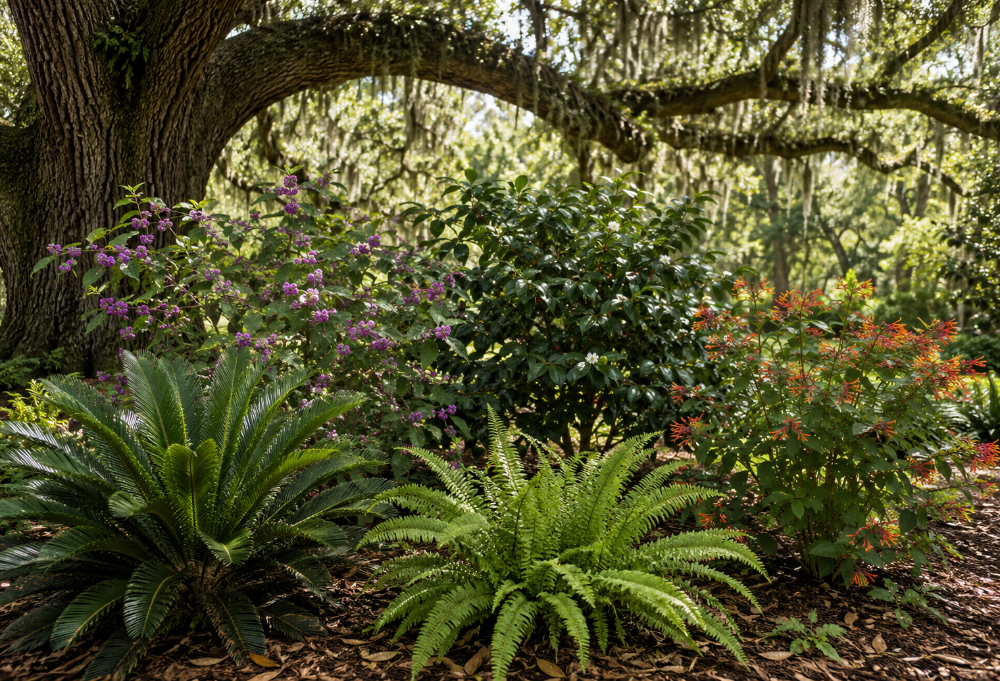
If you have ever stood beneath the sprawling canopy of a Live Oak and wondered what on earth you could possibly grow in that dry, shadowy space below, you are not alone. Gardeners in Live Oak, FL and across the state ask this question constantly. The ground under a mature Live Oak can feel like a lost cause: dense shade filters out the sun, thick roots compete for every drop of moisture, and the soil tends toward the dry and acidic side. Yet this seemingly hostile microclimate is actually prime real estate for the right plants. Nature has spent thousands of years crafting native Florida plants perfectly suited to exactly these conditions.
Choosing native plants for your Florida landscape carries real advantages beyond aesthetics. Native Florida plants thrive in the state’s soil and climate, meaning they require less water, fertilizer, and maintenance, allowing you to create a sustainable, eco-friendly landscape that benefits both your property and the surrounding environment. When you pair the right native species with the Live Oak’s unique understory, you stop fighting your garden and start working with it.
Here are five outstanding native Florida plants that will transform the ground beneath your Live Oak into a layered, living landscape.
1. Coontie: Florida’s Ancient Survivor
Few native Florida plants carry the weight of history quite like coontie (Zamia integrifolia). Long before Florida had landscaped gardens, coontie was already thriving in the sandy, dry soils beneath native oak hammocks. This low-growing cycad is one of Florida’s only native cycads, and its deep-rooted toughness makes it a natural fit for the challenging conditions found under Live Oaks. Drought, poor soil, and heavy shade are simply home to this plant.
Coontie is a small cycad with much-branched, underground stems. The leaves serve as a favorite larval food source for the rare Atala butterfly, and new growth appears each spring, though if cut back, new leaves may be generated at any time. Coontie grows in a compact, fountain-like shape with dark green, feathery fronds that stay attractive throughout the year, typically reaching one to three feet in height, making it useful as a groundcover, border planting, or low mass planting beneath trees.
For residents of Live Oak, FL, coontie requires almost no ongoing care once it is established. It asks for little and gives back generously, offering year-round structure and a direct ecological connection to Florida’s ancient natural heritage.
2. American Beautyberry: A Burst of Seasonal Drama
If you want a plant that stops visitors in their tracks, American beautyberry (Callicarpa americana) is your answer. Beautyberry is a fast-growing shrub that reaches up to 6 feet tall. Clusters of pink flowers encircling the stems at the leaf axils are produced in the summer, followed by vibrant clusters of bright purple fruits that remain on the plant for several months.
Known for its striking clusters of magenta berries that appear in autumn, beautyberry thrives in partial shade and provides habitat for birds and other wildlife, offering cover and food sources as summer winds down. This makes it an especially smart choice beneath a Live Oak, where the filtered light suits it perfectly.
Beautyberry stands out with bright purple berries in fall, and its arching branches create a lovely shape. This shrub grows well in sun or partial shade and needs minimal watering once established, also resisting pests naturally. Gardeners in Live Oak, FL will appreciate how little intervention beautyberry demands while delivering such a dramatic seasonal payoff.
3. Wild Coffee: The Understory Workhorse
Wild coffee (Psychotria nervosa) might not have the flashiest common name, but it earns its place in any shaded Florida garden through reliable performance and genuine ecological value. Wild coffee is an excellent small shrub that can be grown as a screen, a short hedge, or simply to fill in a shady location.
Wild coffee reaches 4 to 5 feet tall and performs especially well in shade areas, making it a natural candidate for the middle layer of a Live Oak garden planting scheme. Its glossy, deeply veined leaves catch whatever light filters through the canopy and give the space a lush, polished appearance even in deep shade. White flowers appear seasonally and attract pollinators, followed by small red berries that birds quickly discover.
One of the most practical things about wild coffee for residents of Live Oak, FL is its adaptability. Most South Florida native shade shrubs need regular deep watering during their first year, then only occasional supplemental irrigation during extended dry spells. They are adapted to naturally lean soils and often perform best with minimal fertilizer, relying instead on organic mulch and leaf litter that slowly enrich the soil. Wild coffee follows this pattern faithfully, making it a low-fuss, high-reward choice.
4. Firebush: Color and Wildlife in One Package
Firebush (Hamelia patens) is a showstopper among native Florida plants, and it handles the partial shade conditions of a Live Oak garden with surprising ease. Firebush is a striking shrub with red-orange flowers that attract hummingbirds and butterflies. That alone makes it worth planting, but its ecological contributions go even further.
Though often associated with sunnier areas, firebush can adapt well to partial shade environments and is prized for its bright orange-red tubular flowers, which bloom almost year-round, attracting hummingbirds and butterflies continuously. Positioning firebush at the outer edges of your Live Oak’s canopy, where sunlight begins to increase, allows it to perform at its best while still benefiting from the tree’s shelter.
Firebush blooms with bright red-orange flowers for most of the year, draws butterflies and hummingbirds easily, grows fast, and tolerates drought well. For anyone gardening in Live Oak, FL who wants color that keeps coming back month after month without constant replanting, firebush delivers season after season.
5. Southern Shield Fern: Lush Green for Deep Shade
Where other native Florida plants start to struggle, the Southern shield fern (Thelypteris kunthii) finds its ideal home. This native fern is built for the deep shade conditions that exist directly beneath a Live Oak’s densest canopy, and it brings a softness and lushness that no other plant in this list quite replicates.
Southern shield fern produces upright, arching fronds in a fresh light green that brightens shaded spaces beautifully. It brings a lush, woodsy feel that fits the setting without any forced arrangement. The Southern shield fern is an ideal choice for full shade areas, with its bright green fronds adding a lush, tropical touch to moist, shaded environments, spreading gently to create a verdant ground cover.
This native fern has adapted over centuries to handle competition, tolerate shade, and thrive beneath massive oak branches. It rarely needs pruning, does not attract serious pest problems, and holds up well through Florida winters. For shaded areas under large oaks where little else will grow, this plant consistently delivers reliable, low-effort beauty.
Pair the Southern shield fern with coontie for contrasting textures at ground level and you will have a foundation planting beneath your Live Oak that looks intentional, lush, and completely at home in the Florida landscape.
Rooted in Place: Bringing It All Together
The space beneath a Live Oak is not a gardening obstacle. It is an invitation. Native Florida plants like coontie, beautyberry, wild coffee, firebush, and Southern shield fern are not simply tolerating those conditions; they are thriving in them because they evolved alongside these very trees. The key is choosing plants that tolerate shade and dry conditions, especially in summer when oak roots pull most of the available moisture from the soil. Native plants are always a safe bet, as they are adapted to local conditions.
For gardeners in Live Oak, FL, leaning into native species means spending less time maintaining and more time enjoying a landscape that hums with birds, butterflies, and natural beauty. Start with one or two of these five plants, observe how they settle in, and let the Live Oak’s understory become the most rewarding corner of your entire yard.
If you have ever stood in a garden center in Live Oak, FL, feeling completely overwhelmed by the rows of plants, soil bags, and tools, you are not alone. Starting a garden for the first time is exciting, but it can quickly become expensive and discouraging if you grab the wrong things off the shelf. The good news is that Live Oak sits in a region of North Florida that is genuinely forgiving for new gardeners. The climate, the soil potential, and the long growing season are all working in your favor. You just need to know where to start.
This guide is built around beginner gardening tips that are specific to the Live Oak, FL area, so you are not following advice written for someone gardening in Ohio or California. Let’s walk through what actually matters when you are just getting started.
Understanding the Growing Environment in Live Oak, FL
Before you spend a single dollar at a garden center in Live Oak, FL, take a few minutes to understand what you are working with. Live Oak sits in Suwannee County in the Big Bend region of Florida, placing it in USDA Hardiness Zone 8b. This means winters are mild but not frost-free. You can expect occasional freezes between December and February, but summers are long, hot, and humid.
That combination shapes everything about which starter plants and supplies make sense for your garden. Unlike South Florida, you cannot treat every tender tropical plant as a permanent resident. Unlike the Panhandle further west, you do have a slightly warmer baseline that opens up some fun options.
The soil in and around Live Oak tends to be sandy with pockets of clay, which means drainage is sometimes good and sometimes poor depending on your specific yard. A simple soil test from your local UF/IFAS extension office can save you from guessing. Knowing your pH and nutrient levels before you buy fertilizer or amendments means your money actually goes toward fixing the right problems.
What Plants to Start With in a North Florida Garden
Choosing the right plants is the single biggest factor in whether a beginner gardener sticks with the hobby or gives up after one frustrating season. The best plants for beginners in North Florida gardens share a few traits: they handle heat well, they recover from occasional neglect, and they do not require constant pest management to survive.
For vegetables, start with Southern staples that have been grown in this region for generations. Collard greens, okra, and sweet potatoes are nearly impossible to kill in North Florida’s summer heat. Cherry tomatoes outperform large beefsteak varieties for beginners because they are more disease-tolerant and produce fruit faster. Squash and cucumbers grow quickly and give beginners the immediate satisfaction of harvesting something edible within a couple of months.
For fall and winter planting, which many beginners overlook, cool-season crops like kale, lettuce, broccoli, and snap peas thrive in the Live Oak area from roughly October through March. This is one of the genuine advantages of gardening in North Florida. Your growing season does not end when the weather gets cool; it just shifts to different crops.
On the ornamental side, native and adapted plants like crapemyrtle, firebush, muhly grass, and gaillardia perform beautifully with minimal intervention. They attract pollinators, handle drought once established, and do not need the heavy fertilizing that more temperamental flowering plants require.
What plants should you skip at first? Avoid roses unless you are ready to commit serious time to fungal disease management. Pass on lavender, which prefers dry climates and often rots in Florida’s humidity. Hold off on fruit trees until you understand your space and soil better. Those can come later once you have some confidence under your belt.
What Supplies to Actually Buy (and What to Leave on the Shelf)
When you walk into a garden center in Live Oak, FL for the first time, the temptation is to fill a cart with every bag, bottle, and gadget on the shelf. Resist that impulse. Most beginners over-buy supplies and under-invest in soil preparation.
The supplies worth buying right away are simple. A good pair of gloves protects your hands and keeps you comfortable during longer sessions. A hand trowel and a full-size spade cover most digging needs for a starter garden. A quality hose with an adjustable nozzle is more practical than a complicated irrigation system when you are just starting out. And a bag of high-quality compost or aged manure is worth every penny because improving your soil from the start makes everything else easier.
If you are gardening in containers, which is a perfectly valid approach for beginners, invest in a bagged potting mix designed for vegetables or general outdoor use. Do not use soil scooped from your yard in containers; it compacts too much and often introduces pests and disease.
What to skip: pre-mixed fertilizer bundles that claim to do everything, specialty pruning kits before you have anything to prune, raised bed kits that cost hundreds of dollars before you know if you enjoy gardening, and pesticide collections you will rarely need if you start with the right plants. The best beginner gardening tip around supplies is simply this: buy less, use what you have, and add tools as actual needs come up.
Watering and Timing: Two Things Beginners Usually Get Wrong
Overwatering kills more beginner gardens than drought does. In the sandy soils common around Live Oak, water moves through quickly, but roots sitting in soggy conditions still rot. The general rule for most vegetables and ornamentals is to water deeply and less frequently, encouraging roots to grow downward rather than staying shallow near the surface.
A good starting practice is to check the soil by pressing a finger about an inch into the ground near your plant’s base. If it feels dry at that depth, water. If it still feels moist, wait another day. This simple check saves plants and reduces your water bill.
Timing matters just as much as quantity. Watering in the morning gives foliage time to dry before evening, which reduces fungal disease pressure, a real concern in Florida’s humid climate. Avoid watering at night whenever possible.
On the topic of planting timing, beginner gardening tips often ignore the importance of matching your planting schedule to the local calendar. In Live Oak, FL, the spring vegetable planting window runs roughly from late February through April. Summer heat arrives fast, so crops that need cool conditions to mature, like spinach or peas, need to go in early. Fall planting begins again in September and October. Following this rhythm rather than planting whenever inspiration strikes makes a significant difference in your results.
Building a Simple Garden Plan Before You Spend Money
The single step most beginners skip is planning before purchasing. You do not need a complicated blueprint, but knowing a few basics before you visit a garden center in Live Oak, FL saves money and prevents frustration.
Start by identifying how much sunlight your intended garden space receives. Most vegetables need at least six hours of direct sun per day. Shade-tolerant options exist, but your choices narrow significantly with less light. If your yard is mostly shaded, containers on a sunny patio or driveway edge are a legitimate solution.
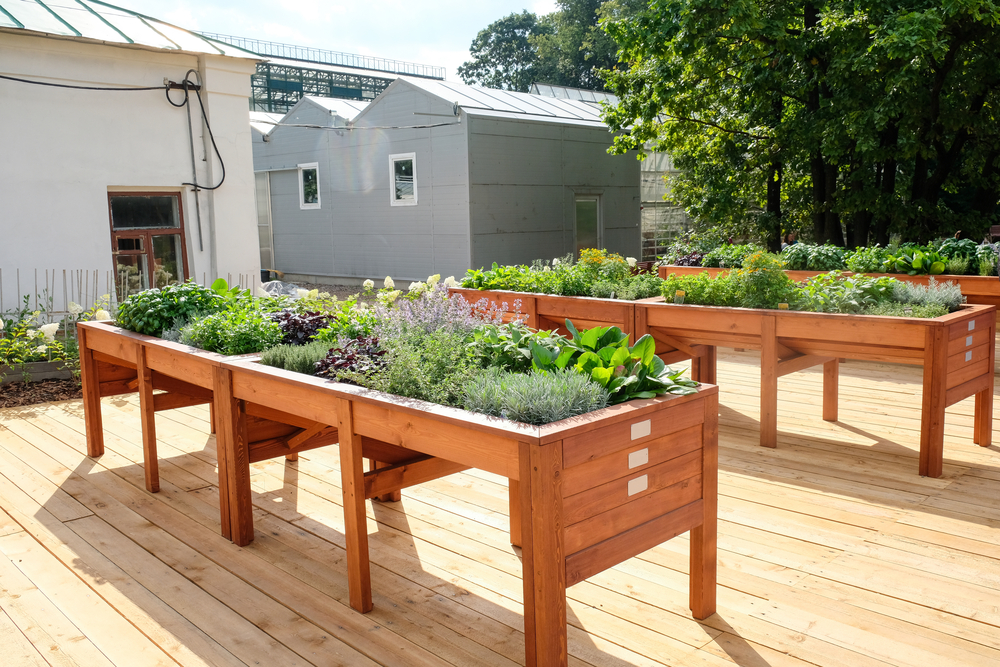
Next, decide whether you want to start in the ground, in raised beds, or in containers. Each approach has different startup costs and maintenance requirements. Ground planting costs less initially but may require more soil amendment. Raised beds give you control over soil quality but require building or buying the bed structure. Containers are the most flexible option and work well for renters or gardeners with limited space.
Finally, write down three to five plants you actually want to grow. Match that list against the best plants for beginners in North Florida gardens, cross-reference with the current planting season, and build your shopping list from there. Arriving at a garden center with a focused list instead of open-ended browsing keeps your budget manageable and your garden realistic.
Conclusion
Beginner gardening in Live Oak, FL does not require a massive investment or advanced knowledge to get going. The climate is cooperative, the local resources are available, and starting small with the right plants and supplies puts you ahead of most first-time gardeners. Focus on soil, choose forgiving plants, buy only what you need, and adjust as you learn. A productive and enjoyable garden is closer than you think.
Container gardening offers the perfect solution for residents of Lake City, FL and Live Oak, FL who want to grow plants without extensive yard space. Whether you live in an apartment with a small patio or have limited ground space, container gardening ideas can transform your outdoor area into a thriving garden oasis. This comprehensive guide explores how to successfully cultivate container gardens in North Florida’s warm climate while maximizing your patio container garden plants.
Container Gardening for Small Spaces
Container gardening is ideal for the patio environments found throughout Lake City, FL and surrounding areas. This gardening method allows you to grow vegetables, herbs, flowers, and ornamental plants in pots rather than traditional in-ground gardens. For residents with limited square footage, small spaces become opportunities rather than obstacles.
The beauty of container gardening lies in its flexibility and accessibility. You can position pots to catch optimal sunlight, move them as seasons change, and control soil quality and moisture levels precisely. In Lake City and Live Oak, FL, many homeowners appreciate how container gardens reduce weeding, minimize pest problems, and create attractive focal points on patios and decks.
Container gardening also works exceptionally well for renters who cannot modify their outdoor spaces permanently. You can create a complete garden ecosystem in movable containers, bringing nature closer to your living area. The investment in quality pots and soil pays dividends through years of reliable plant growth.
Best Plants for Pots in North Florida Summer
Selecting appropriate plants ensures your North Florida summer gardens thrive despite heat and humidity challenges. The best plants for pots in North Florida summer withstand intense sun, high temperatures, and occasional afternoon thunderstorms common to the region.
Okra performs remarkably well in containers during North Florida summers. These heat-loving plants produce abundantly when grown in large pots with quality potting soil. Cherry tomatoes also flourish in containers, providing fresh fruit throughout the warm season. Choose heat-tolerant varieties that resist diseases common in humid climates.
Basil represents an excellent herb choice for container gardeners in Live Oak, FL and surrounding areas. This aromatic plant thrives in warm weather and produces continuously when leaves are harvested regularly. Sweet potato vine serves double duty, offering both edible tubers and attractive foliage for ornamental purposes.
Pepper plants, both hot and sweet varieties, absolutely love the North Florida climate. These productive plants generate yields for months when grown in appropriately sized containers. Eggplant similarly excels in containers, requiring consistent warmth and moisture during the growing season.
For ornamental options, marigolds handle North Florida heat beautifully and bloom prolifically in pots. Lantana creates splashes of color while attracting pollinators to your patio container garden plants. Pentas offer shade tolerance compared to other flowering plants, making them versatile choices for partially shaded patios in Lake City, FL.
Herbs like oregano, thyme, and rosemary adapt well to container growing while requiring minimal maintenance. These Mediterranean-origin plants actually prefer drier conditions, making them forgiving options for busy gardeners. Cilantro and parsley provide fresh culinary herbs when positioned in containers receiving morning sun.
Creating the Ideal Container Garden Setup
Success with container gardening ideas depends largely on proper setup and planning. Begin by selecting containers with drainage holes, ensuring water moves freely through soil and prevents root rot. Pot size matters significantly; larger containers retain moisture longer and support bigger plants, while smaller pots require more frequent watering.
Location selection proves critical in Lake City and Live Oak, FL, where summer sun intensity can stress plants. Most vegetables and herbs require six to eight hours of direct sunlight daily. Position containers where they receive adequate light while potentially benefiting from afternoon shade during the hottest months.
Use high-quality potting soil specifically formulated for containers, not garden soil from ground beds. Container potting mixes drain properly while retaining appropriate moisture levels. Adding compost improves nutrient content, giving your plants sustained nutrition throughout growing seasons.
Watering frequency increases dramatically with container gardening. Pots dry faster than ground gardens, particularly during North Florida summers. Check soil moisture daily, watering when the top inch feels dry to touch. Early morning watering prevents fungal issues common in humid regions.
Fertilizing container plants becomes necessary since nutrients wash away through drainage holes. Apply balanced fertilizer every two weeks during active growing seasons. Alternatively, add slow-release fertilizer pellets at planting time for consistent nutrition.
Designing Your Patio Container Garden
Creating an attractive patio container garden requires thoughtful arrangement and plant selection. Group containers of varying heights to create visual interest and depth. Combine tall plants like basil or okra with shorter trailing plants to create dynamic compositions.
Consider color coordination when selecting patio container garden plants for your Lake City, FL or Live Oak landscape. Combine cool colors like purples and blues with warm tones like reds and oranges. Repetition of colors creates cohesion, while contrasting hues draw the eye.
Mixing textures enhances visual appeal significantly. Pair feathery fern foliage with broad-leaved plants like sweet potato vine. Combine upright growers with trailing varieties that cascade over pot edges, creating fuller appearances.
Vertical gardening expands planting options in small spaces. Wall-mounted planters, tiered plant stands, and hanging baskets increase growing area without consuming valuable patio square footage. This approach works especially well for Lake City residents with minimal patio space.
Container size influences both aesthetics and plant health. Undersized pots create crowded appearances while limiting plant growth. Allow adequate root space by selecting pots proportional to mature plant sizes. Large containers create impressive specimens while reducing watering frequency.
Seasonal Care and Maintenance Tips
North Florida’s subtropical climate creates unique seasonal challenges for container gardeners. Spring through fall brings steady growing seasons, requiring consistent watering and feeding schedules. Winter months demand adjustments, as many heat-loving plants decline or become dormant.
During intense summer heat in Live Oak, FL and surrounding areas, provide afternoon shade for sensitive plants. Move containers to shadier locations or install temporary shade cloth. Increase watering frequency, sometimes reaching daily schedules during peak heat.
Pest management becomes easier with container gardening. Regular inspection allows early detection and treatment of spider mites, whiteflies, and aphids. Organic pesticides work effectively for small-scale container gardens without harming beneficial insects.
Disease prevention involves proper air circulation and avoiding overhead watering. Water soil directly rather than wetting foliage, reducing fungal disease risks in humid North Florida climates. Remove any diseased leaves immediately to prevent spread.
Fertilizer schedules may require adjustment seasonally. Reduce feeding during winter when most plants grow slowly. Resume regular fertilization when spring growth accelerates. This approach conserves resources while supporting healthy plant development.
Winter preparation protects cold-sensitive plants in Lake City and Live Oak, FL. Move tender plants indoors or to protected locations when frost threatens. Even tender perennials benefit from shelter during occasional cold snaps common to North Florida winters.
Conclusion
Container gardening ideas provide accessible solutions for growing plants in Lake City, FL and Live Oak, FL small spaces. By selecting appropriate plants, establishing proper care routines, and designing thoughtfully, you can create thriving patio container garden plants that enhance your outdoor living areas. The flexibility and accessibility of container gardening make it ideal for anyone wanting to grow fresh vegetables, herbs, and ornamental plants regardless of yard limitations.